techDriven by Code. Defined by Innovation

Transportation & Logistics App Development Company

Digitize the way your logistics business plans, moves, tracks, and delivers goods. We build logistics applications for fleets, shippers, 3PLs, warehouses, and delivery teams, combining connected workflows, AI-driven capabilities, and ISO-certified development processes.

Logistics App Development Backed by Proven Engineering Experience

14+

Years of Experience

1200+

Projects Delivered

98%

Client Retention

100%

Compliance-Ready

150+

Technology Experts

Logistics App Development Built Around Your Operations, Technology, and Growth

Not every logistics product starts from the same point. You may be launching a new application, modernizing an existing platform, connecting carriers and partners, digitizing manual workflows, or preparing an established system for higher operational demand. Our logistics app development expertise adapts to your product stage, operating model, technical environment, and delivery requirements.

Build a New Logistics Application

Build a New Logistics Application

Have a logistics product ready to move from concept to application? We translate operational requirements into application architecture, user journeys, shipment workflows, data models, APIs, integrations, dashboards, and interfaces. The solution is structured around how your teams, customers, drivers, carriers, warehouses, and partners actually interact across the logistics lifecycle.
Modernize Existing Logistics Technology

Modernize Existing Logistics Technology

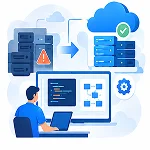
Legacy architecture, outdated frameworks, disconnected systems, and tightly coupled components can make logistics applications difficult to maintain and evolve. We modernize selectively through application refactoring, API enablement, database restructuring, cloud migration, and service decomposition while preserving essential workflows, operational data, and functionality your teams already depend on.

Connect Your Logistics Ecosystem

Connect Your Logistics Ecosystem

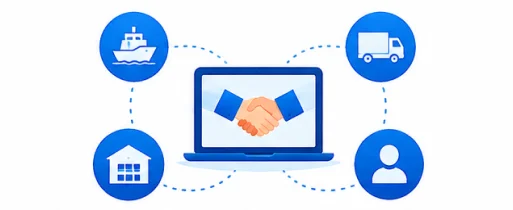
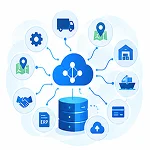
Logistics applications rarely operate in isolation. They may exchange data with fleet management systems, GPS platforms, warehouse apps, ERP solutions, carrier networks, mapping services, marketplaces, payment providers, and other operational platforms. We engineer APIs, webhooks, event-driven services, and data pipelines that keep information moving consistently across connected logistics workflows.

Prepare Your Logistics App for Growing Demand

Prepare Your Logistics App for Growing Demand

More shipments, users, vehicles, locations, integrations, and real-time events can place significant demands on application infrastructure. We strengthen application services, databases, APIs, cloud infrastructure, caching, queues, and observability to support reliable performance as operational volume grows, helping critical workflows remain responsive during periods of sustained or peak demand.

Apply AI to Practical Logistics Use Cases

Apply AI to Practical Logistics Use Cases

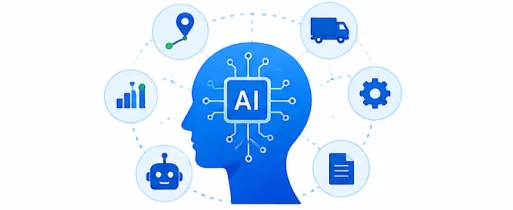
AI delivers value when it addresses a measurable operational requirement. We integrate machine learning, generative AI, and automation into logistics applications for route optimization, demand forecasting, shipment anomaly detection, document processing, predictive maintenance, ETA intelligence, customer support, and workflow prioritization, with appropriate validation and human oversight.

Logistics App Development Solutions Across the Industries We Serve

Logistics operations vary across transportation, warehousing, delivery, freight, and supply chain environments. Our logistics app development expertise supports businesses with applications that connect people, vehicles, shipments, facilities, and systems, improving visibility, coordination, and control across complex operational workflows.

freight app development

Fleet & Transportation Management

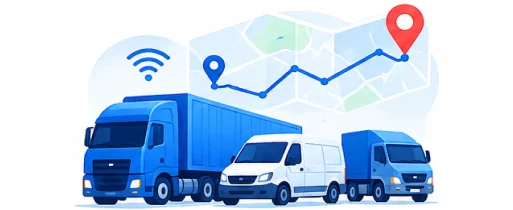
Fleet operations span vehicles, drivers, routes, fuel, maintenance, and dispatch. A purpose-built fleet app brings these moving parts into one operational layer, supporting live tracking, route planning, driver coordination, vehicle monitoring, maintenance schedules, and performance visibility.

  • Fleet Management: Vehicles, drivers, assignments, and operational records
  • GPS Tracking: Real-time location, movement, and vehicle visibility
  • Route Planning: Route creation, optimization, and dispatch coordination
shipment tracking app development

Last-Mile Delivery Applications

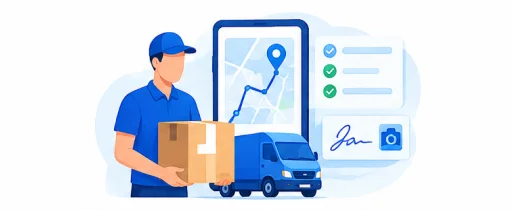
Last-mile operations depend on accurate coordination between dispatch teams, drivers, businesses, and customers. We develop delivery applications that support order assignment, route planning, real-time tracking, delivery status, proof of delivery, customer notifications, and exception management.

  • Delivery Management: Orders, assignments, statuses, and delivery workflows
  • Driver Applications: Routes, stops, navigation, updates, and task management
  • Real-Time Tracking: Driver and shipment location visibility
supply chain app development

Freight & Cargo Management

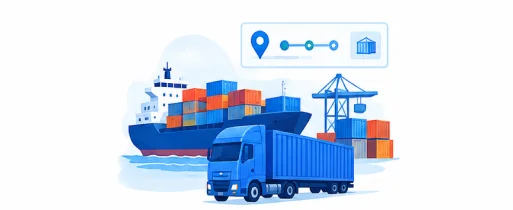
Freight operations involve multiple parties, documents, shipments, carriers, and changing delivery conditions. Our freight management applications connect these workflows through carrier assignment tracking, complete documentation including bills of lading and manifests, to provide better shipment visibility, status tracking, and operational control across the freight lifecycle.

  • Shipment Management: Booking, tracking, status updates, and shipment records
  • Freight Tracking: Real-time shipment status and location visibility
  • Exception Management: Delays, disruptions, escalations, and resolution workflows
logistic application development company

Warehouse & Inventory Applications

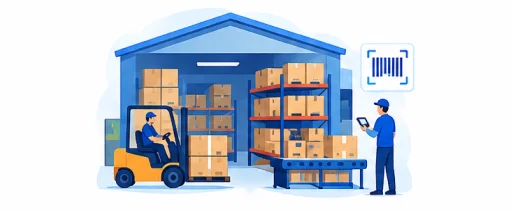
Warehouse technology must keep receiving, storage, picking, packing, inventory, and dispatch synchronized. Warehouse applications support order fulfillment status updates, workflow coordination, and operational dashboards with metrics and reporting, connecting warehouse activity and barcode-tracked movement with wider supply chain systems and locations.

  • Inventory Management: Stock levels, movements, locations, and availability
  • Warehouse Operations: Receiving, put-away, picking, packing, and dispatch
  • Barcode & Scanning: Product identification and movement tracking
logistics application development services

Supply Chain Management Applications

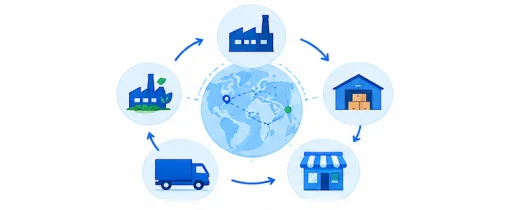
Supply chain applications connect suppliers, warehouses, transportation providers, distributors, and customers around shared operational information. Centralized workflows support purchase orders, shipment monitoring status tracking, performance measurement through KPIs and trends, replenishment planning, and cross-system data exchange across the full supply chain network.

  • Supply Chain Visibility: Shipments, inventory, suppliers, and operational events
  • Supplier Management: Supplier records, performance, communication, and workflows
  • Demand Planning: Forecasting, inventory planning, and replenishment
logistic software development

Courier & Parcel Delivery Applications

Courier businesses manage high volumes of time-sensitive deliveries across constantly changing routes and locations. We develop logistics applications that support parcel booking, labels, delivery confirmation through signatures and photos, customer notifications, tracking portals, and operational reporting alongside real-time dispatch and driver coordination.

  • Parcel Management: Booking, labels, tracking, and shipment records
  • Dispatch Management: Job assignment, scheduling, and driver coordination
  • Live Tracking: Real-time parcel and delivery visibility
logistics software development company

Logistics Marketplaces

Logistics marketplaces bring shippers, carriers, freight providers, and service partners into a shared digital environment. Marketplace platforms support rate quotation workflows with bids and comparisons, booking confirmations and documentation, plus partner dashboards for operations, communications, and performance reporting across multi-sided logistics networks.

  • Carrier Marketplaces: Carrier discovery, profiles, availability, and matching
  • Load Boards: Shipment listings, search, filtering, and booking
  • Booking Management: Orders, confirmations, documentation, and status
logistics software development company

Logistics Analytics & Visibility Platforms

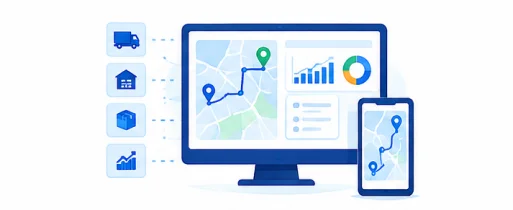
Operational visibility depends on converting fragmented logistics data into information teams can act upon. Analytics applications consolidate fleet, shipment, warehouse, inventory, and delivery data with exception monitoring for delays and disruptions, plus custom reporting exports and scheduled insights for faster operational decisions.

  • Operational Dashboards: Fleet, shipment, warehouse, and delivery KPIs
  • Performance Analytics: Costs, utilization, delivery times, and productivity
  • Predictive Insights: Demand, delays, maintenance, and operational trends
logistics software development company

AI-Powered Logistics Applications

AI capabilities can strengthen logistics workflows where speed, prediction, and automation matter. Practical applications include demand forecasting for capacity planning, predictive maintenance for vehicle health, plus intelligent automation covering document processing, customer support, and workflow prioritization across daily logistics operations and decision-making.

  • Route Optimization: Dynamic routes based on operational conditions
  • ETA Prediction: Data-driven arrival estimates and delay detection
  • Intelligent Automation: Document processing, support, alerts, and workflow assistance
logistics app development company

Your Logistics Operations Shouldn’t Be Held Back by Technology

Whether you’re launching a new logistics application, modernizing legacy systems, connecting operational platforms, or preparing for growing shipment volumes, the right technology foundation can remove operational bottlenecks and create room for your business to scale. Let’s discuss what your logistics application needs next.

Discuss Your Project

Technology Behind Modern Logistics App Development

Modern logistics platforms increasingly combine AI, real-time data, cloud infrastructure, automation, APIs, and connected devices to coordinate increasingly complex operations. These technologies can improve visibility, automate repetitive tasks, strengthen decision-making, and create more responsive experiences across transportation, delivery, fleet, and supply chain workflows.

fintech management consulting

Artificial Intelligence

AI can bring greater intelligence to logistics workflows where large volumes of information need to be processed quickly. Applications can use it for customer support, document handling, shipment analysis, exception management, workflow automation, and operational recommendations that reduce repetitive manual effort.

fintech web development

Machine Learning

Historical and real-time logistics data creates opportunities to identify patterns that conventional rules may miss. Machine learning can support demand forecasting, ETA prediction, route optimization, anomaly detection, predictive maintenance, capacity planning, and other use cases where operational decisions benefit from continuously analyzed data.

fintech design agency

Generative AI

Generative AI can make logistics applications easier to interact with and operate. Conversational assistants, document extraction, shipment summaries, knowledge retrieval, automated reporting, and natural-language search can help teams access operational information faster without navigating multiple screens or manually processing large volumes of information.

fintech web design agency

Agentic AI

Agentic AI coordinates complex logistics workflows across multiple systems, supporting shipment monitoring, exception handling, document processing, customer communication, task assignment, and operational follow-ups while maintaining defined permissions, validation steps, and human oversight throughout critical logistics operations.

fintech software outsourcing

IoT & Connected Devices

Vehicles, scanners, sensors, trackers, and other connected devices can continuously generate information about assets and operations. IoT-enabled logistics applications can use this data for fleet visibility, temperature monitoring, asset tracking, vehicle diagnostics, warehouse activity, shipment conditions, and real-time operational alerts.

fintech development outsourcing

Real-Time Data & Analytics

Operational decisions depend on having current information rather than relying solely on historical reports. Real-time analytics can combine fleet, shipment, inventory, warehouse, and delivery data into dashboards, alerts, performance metrics, and decision-support experiences that help teams identify issues and respond while operations are underway.

Cloud Computing

Cloud Computing

Cloud infrastructure supports logistics applications handling distributed users, APIs, data workloads, integrations, and fluctuating volumes through scalable services, centralized data, infrastructure automation, continuous deployment, monitoring, and reliable access across geographically distributed logistics operations and environments.

financial software development services

API & Integration Technologies

Logistics ecosystems depend on information moving between transportation systems, ERP platforms, warehouse app, mapping services, GPS providers, carrier networks, marketplaces, and other operational tools. API-led architecture can connect these systems through REST APIs, webhooks, event-driven services, and structured data exchange.

custom financial software development

Automation

Automation can remove repetitive work from workflows that span orders, shipments, documentation, notifications, scheduling, and operational reporting. Rule-based processes and intelligent automation can trigger actions, synchronize information, generate updates, route tasks, and keep teams focused on exceptions and decisions requiring human attention.

custom financial software development

Cybersecurity

Connected logistics environments require security across operational data, customer information, devices, APIs, applications, and third-party systems. Identity management, access controls, encryption, secrets management, audit logging, API protection, vulnerability management, monitoring, and secure deployment practices strengthen protection.

Evolve Your Logistics Technology Without Rebuilding Everything

Logistics operations often rely on technology built at different times for different functions. TMS, WMS, ERP, fleet, carrier, mapping, and warehouse platforms can become difficult to evolve when data and workflows remain fragmented. We help re-engineer these environments while protecting the operational processes your business depends on.

01

Modernize Legacy Logistics Applications Without Disrupting Operations

We modernize mission-critical logistics applications incrementally by decomposing monoliths, replacing obsolete frameworks, introducing APIs, refactoring databases, and progressively migrating selected workloads to cloud infrastructure.

Decompose monolithic logistics applications
Replace obsolete frameworks and application components
Introduce APIs around legacy platforms
02

Build Connectivity Across Your Logistics Ecosystem

We connect TMS, WMS, ERP, carriers, telematics, mapping platforms, marketplaces, and IoT devices through APIs, EDI, webhooks, middleware, and synchronized event-driven data flows.

TMS, WMS, and ERP integrations
Carrier and freight-platform APIs
GPS, telematics, and IoT integrations
03

Turn Logistics Data Into Smarter Operational Decisions

We integrate AI and machine learning into logistics applications for predictive ETAs, demand forecasting, route optimization, capacity planning, anomaly detection, automated documents, exception handling, and operational visibility.

Predictive ETA and delay analysis
Demand and inventory forecasting
Route and capacity optimization

Your logistics technology should support better-connected, more responsive operations, not create additional complexity. Let’s identify the architectural constraints, integration gaps, and operational bottlenecks worth solving first

Request a Proposal

Technology Stack Powering Scalable Logistics Applications

Logistics platforms need to handle real-time data, connected systems, mobile users, location services, and growing transaction volumes without compromising performance. We select and integrate technologies that support reliable operations, seamless connectivity, scalable architecture, and the evolving demands of modern logistics applications.

industry image

Swift

industry image

Objective-C

industry image

Java

industry image

Kotlin

industry image

Flutter

industry image

Xamarin

industry image

JavaScript

industry image

React Native

industry image

React.js

industry image

AngularJS

industry image

Express.js

industry image

Node.js

industry image

MySQL

industry image

PHP

industry image

Python

industry image

MongoDB

industry image

tensorFlow

industry image

PyTorch

industry image

Scikit-Learn

industry image

Keras

industry image

Theano

industry image

MXNet

industry image

H2O.ai

industry image

AWS

industry image

Ethereum

industry image

Cardano

industry image

R3 Corda

industry image

Quorum

industry image

CSS3

industry image

Hyperledger Fabric

industry image

Web3.js

industry image

Cassandra

industry image

Adobe XD

industry image

Sketch

industry image

Figma

industry image

Adobe Photoshop

industry image

Zeplin

industry image

Marvel

industry image

Balsamiq

industry image

Proto.io

The Logistics App Development Process We Follow

Our logistics app development process moves from operational discovery and product planning to app design, engineering, integration, deployment, and continuous optimization.

Discovery
01

Discovery

The process maps drivers, dispatchers, warehouse teams, fleet managers, customers, and administrators, documenting shipment journeys, workflows, roles, business rules, exceptions, data sources, and existing systems.

 Strategy
02

Strategy

Logistics app development services translate product requirements into a technical roadmap covering architecture, APIs, databases, integrations, cloud infrastructure, permissions, MVP priorities, dependencies, technology choices, and milestones.

 UX/UI
03

UX/UI

Role-specific journeys shape driver apps, dispatcher dashboards, warehouse interfaces, customer portals, tracking screens, maps, notifications, and administrative panels around tasks, information, actions, and operational decisions.

Development
04

Development

The logistics app development team builds mobile and web applications alongside backend systems, implementing shipment management, dispatch, fleet tracking, routing, delivery workflows, geolocation, notifications, dashboards, and access controls.

Integration & Optimization
05

Integration & Optimization

Logistics applications connect with TMS, WMS, ERP, carrier APIs, GPS, telematics, mapping, payment, barcode, and IoT systems, followed by testing, deployment, monitoring, analytics, and optimization.

Logistics App Development Services for Every Stage of Movement

From transportation planning and fleet operations to warehousing, fulfillment, and final delivery, logistics businesses rely on connected applications to keep physical operations moving. Our logistics development services cover these workflows through purpose-built apps, system integrations, operational data, and practical AI applications.

Transportation management applications help transportation teams coordinate freight planning, carrier assignment, dispatch scheduling, ETA forecasting, freight rating, and document management. Our logistics development company can build TMS platforms for transportation managers, dispatchers, and carrier teams, connecting ERP, WMS, mapping, telematics, and reverse logistics systems.

  • Transportation demand and load planning
  • AI-assisted route and load optimization
  • Real-time shipment and vehicle tracking

Fleet management applications bring vehicle operations, driver workflows, fuel monitoring, ELD and HOS compliance, route planning, and maintenance scheduling into one connected environment, supporting fleet managers, dispatchers, drivers, and maintenance teams through dispatch coordination and integrated telematics and GPS platforms.

  • GPS and vehicle location tracking
  • Driver behavior and performance records
  • Predictive maintenance using vehicle and service history

Warehouse applications coordinate receiving, storage, fulfillment, and dispatch across facilities, connecting workforce and equipment workflows with ERP, WMS, barcode, and RFID integration. We develop solutions for warehouse managers, supervisors, inventory teams, and operators, linking scanning technologies with existing warehouse equipment.

  • Receiving and putaway workflows
  • Inventory and location management
  • Picking, packing, and fulfillment coordination

Last-mile applications connect delivery operations with drivers, customers, orders, and transportation systems to coordinate final-mile execution, customer communication, and proof-of-delivery processes. We build solutions for dispatchers, delivery teams, and customer service teams, integrating mapping services, order platforms, and communication tools.

  • Delivery planning and execution
  • Driver and order coordination
  • Delivery exception management

Customer orders often originate across portals, marketplaces, eCommerce platforms, and enterprise systems before entering fulfillment and transportation workflows. Logistics order management development connects these sources with carrier and logistics system connectivity, exception and status management, invoicing, and customer portals.

  • Multi-channel order aggregation
  • Order allocation and fulfillment coordination
  • Shipment creation and scheduling

Inventory and asset tracking logistics applications help warehouse, supply chain, and operations teams monitor containers, equipment, temperature, humidity, vibration, and condition history across locations, with geofencing, event alerts, and demand forecasting. Our developers connect tracking technologies with existing inventory systems.

  • Real-time cargo and asset tracking
  • Barcode, RFID, GPS, and BLE integration
  • AI-based anomaly detection for asset movement and condition

Logistics analytics applications consolidate transportation, warehouse, order, inventory, and workforce data to support demand forecasting, labor utilization analysis, scheduled reporting, scenario modeling, and risk analysis. We build solutions for logistics managers and supply chain teams using data platforms and BI.

  • Fleet and transportation performance dashboards
  • AI-driven trend and anomaly analysis
  • Cost and revenue analytics

ELD and HOS records, GPS signals, tachograph data, fuel consumption, and environmental sensor readings can originate from different devices and platforms. Logistics integration services bring these inputs with APIs, EDI, event streams, and transformation layers for transportation and operational workflows.

  • Vehicle and telematics connectivity
  • IoT device and sensor integration
  • Real-time data synchronization

Legacy logistics environments often distribute operational information across outdated applications, spreadsheets, and disconnected systems. Our modernization services help IT teams and operations leaders automate manual workflows, connect ERP, TMS, WMS, and CRM platforms, and phase out existing legacy modules gradually.

  • Legacy application modernization
  • API enablement and system integration
  • Data migration and normalization

Why Talentelgia Is the Right Partner for Logistics App Development

Our logistics app development agency has delivered technology products across diverse industries and business environments, building experience across transportation, logistics, fleet operations, supply chain, warehousing, mobility, and connected systems. This cross-industry exposure gives our teams practical experience working with varied workflows, user roles, integrations, data environments, and product requirements that shape logistics applications.

14+ Years of Technology Experience

14+ Years of Technology Experience

Logistics apps need to support more than shipment screens and tracking dashboards. With 14+ years of technology experience, Talentelgia brings established engineering practices across mobile and web development, backend systems, APIs, cloud infrastructure, databases, AI/ML, and connected technologies to logistics product development.

50+ Technology Professionals Across Product Engineering

50+ Technology Professionals Across Product Engineering

A logistics app can involve multiple applications and user roles, from driver mobile apps and dispatcher dashboards to customer portals and warehouse interfaces. Our 50+ technology professionals bring together developers, UX/UI specialists, QA engineers, DevOps professionals, and integration experts to support product development across these layers.

Experience Building Real-Time Logistics Applications

Experience Building Real-Time Logistics Applications

Real-time visibility is central to modern logistics operations. Our illustrative portfolio includes 50+ fleet tracking, delivery management, and shipment visibility applications, incorporating GPS location updates, route information, delivery status, driver activity, geofencing, push notifications, and operational dashboards.

Logistics Integrations Across the Connected Ecosystem

Logistics Integrations Across the Connected Ecosystem

A logistics application rarely works in isolation. Our integration capabilities cover TMS, WMS, ERP, CRM, payment gateways, mapping platforms, carrier APIs, GPS providers, telematics systems, and IoT devices. For example, a delivery platform can combine Google Maps routing, Samsara telematics, Stripe payments, and an existing ERP through API-driven integration workflows.

Compliance-Ready Logistics App Engineering

Compliance-Ready Logistics App Engineering

Logistics applications may need to account for transportation, driver, cargo, customs, and cross-border requirements depending on the markets they serve. Our engineering approach can incorporate applicable workflows around ELD, HOS, DOT, C-TPAT, AEO, SOLAS VGM, IMO, IATA Cargo, TAPA, ISO certifications, GS1, HACCP, and Dangerous Goods Regulations, with requirements mapped into relevant application workflows, records, permissions, and audit trails.

Post-Launch Engineering for Evolving Logistics Products

Post-Launch Engineering for Evolving Logistics Products

Launching a logistics app is only the beginning. New carriers, vehicles, warehouses, customers, integrations, and operational requirements can change the product continuously. Our teams can provide feature enhancements, API updates, performance optimization, cloud maintenance, security improvements, monitoring, QA, and ongoing technical support as the logistics platform evolves.

Proven Expertise for Businesses Worldwide

We work with businesses worldwide, combining deep technical expertise, product knowledge, and disciplined delivery practices to develop reliable digital solutions aligned with business goals, technical requirements, and evolving customer needs.

Go farm Yourself
Aiviz
Trade-Echo
Orion
Healthful
MarketFloor
Matrix
OptionPlay
Prep
marketplace
Pathory
life-science
CrkRules
Go farm Yourself
Aiviz
Trade-Echo
Orion
Healthful
MarketFloor
Matrix
OptionPlay
Prep
marketplace
Pathory
life-science
CrkRules

Experiences From Clients We’ve Helped Build Logistics Solutions

Our Security & Engineering Approach

Logistics applications connect vehicles, drivers, warehouses, carriers, customers, IoT devices, APIs, and continuously changing shipment data. Our engineering approach addresses security, resilience, integration reliability, performance, data protection, testing, and deployment controls across the connected environments that keep logistics operations moving.

Moving cargo across borders adds customs, security, and data rules fast.

We help you figure out what actually applies before you build.

Get A Consultation!
01
GOVERNANCE

Compliance-Ready Logistics Architecture

Logistics apps can be designed with applicable transportation, cargo, customs, security, and data requirements considered from the beginning. Depending on the workflows and markets supported, this may include FMCSA, ELD/HOS, SOLAS VGM, IATA Dangerous Goods Regulations, GDPR, CCPA, and other regional requirements.

02
DEVELOPMENT

US Fleet & Transportation Compliance

Fleet management and dispatch applications operating in the United States can incorporate workflows aligned with applicable FMCSA requirements, Electronic Logging Devices (ELD), Hours of Service (HOS), and DOT recordkeeping. This helps organizations manage driver hours, operational records, dispatch information, and compliance-related workflows consistently.

03
DATA SECURITY

Ocean Freight & Cargo Requirements

Ocean freight platforms can support workflows around requirements such as SOLAS Verified Gross Mass (VGM), relevant IMO requirements, and US import processes including Importer Security Filing (ISF) and Automated Manifest System (AMS)/ACE. The implementation depends on routes, cargo types, trading partners, and services supported.

04
INTEGRATION

Customs & Cross-Border Logistics

Cross-border logistics applications can incorporate workflows for customs documentation, classification information, broker communication, shipment records, and applicable supply chain security programs. Depending on the operating model, this may include considerations related to C-TPAT, Authorized Economic Operator (AEO), and other trusted-trade processes.

05
INFRASTRUCTURE

Air Cargo & Dangerous Goods Workflows

Applications supporting air freight can account for applicable IATA Cargo and Dangerous Goods Regulations (DGR), helping structure shipment information, documentation, handling instructions, validation, and carrier acceptance workflows. Requirements can be configured around cargo classifications, routing, operational processes, and the jurisdictions involved.

06
OPTIMIZATION

Supply Chain Security & Shipment Traceability

Logistics platforms managing sensitive, high-value, or regulated cargo can incorporate controls informed by frameworks and standards such as TAPA TSR, TAPA FSR, ISO 28000, and GS1. These considerations can support facility security, transportation risk management, product identification, shipment traceability, and structured supply chain data.

07
QUALITY

Cold Chain & Specialized Logistics

Temperature-sensitive logistics applications can support operational controls around temperature monitoring, alerts, traceability, documentation, and exception management. Where relevant, workflows can be informed by HACCP principles and applicable handling requirements, with implementation tailored to the commodities, facilities, transportation conditions, and markets involved.

08
DELIVERY

Data Protection & Payment Security

Logistics applications may process customer information, driver data, shipment records, location information, and payment details. Security controls can address applicable privacy and payment requirements such as GDPR, CCPA, and PCI DSS where cardholder data is involved, with measures covering access control, encryption, retention, auditability, and secure data exchange.

Engagement Models for Logistics App Development

Logistics technology projects vary in scope, operational complexity, integration requirements, and internal engineering capacity. Our engagement models support everything from defined application builds to long-term product engineering and specialized technical support, giving logistics businesses the flexibility to scale development around their roadmap and operational needs.

Move Your Logistics Product From Idea to App

Whether you're planning a fleet management app, delivery platform, shipment tracking solution, or connected logistics product, bring your requirements to a team that can shape the architecture, integrations, and product roadmap around your operations.

Frequently Asked Questions

  • It means that the backend has identified the current user as a non-admin or has determined that the user does not have the required permission to access the requested resource.
  • It means that the backend has identified the current user as a non-admin or has determined that the user does not have the required permission to access the requested resource.
  • It means that the backend has identified the current user as a non-admin or has determined that the user does not have the required permission to access the requested resource.

  1. It means that the backend has identified the current user as a non-admin or has determined that the user does not have the required permission to access the requested resource.
  2. It means that the backend has identified the current user as a non-admin or has determined that the user does not have the required permission to access the requested resource.
  3. It means that the backend has identified the current user as a non-admin or has determined that the user does not have the required permission to access the requested resource.
We empower businesses with smart, future-ready IT services that accelerate performance and drive innovation. We will help you turn technology into your competitive edge.

Comprehensive Technology Solutions For Every Need

Schedule a Free Consultant

Phone

Get expert consultation for your project. Your ideas and project details remain completely confidential under NDA protection.

0 + 0 = ?
cookies-icon

We use cookies on our website to give you the most relevant experience by remembering your preferences and repeat visits. By clicking “Accept”, you consent to the use of ALL the cookies.