techDriven by Code. Defined by Innovation
Engineer AI-Powered

Logistics Software for Smarter Fleet Operations

Build logistics platforms around the operational systems, data flows, and physical constraints that move freight. From TMS and WMS platforms to fleet, last-mile, warehouse, and supply-chain systems, we engineer software for dispatch, routing, shipment visibility, inventory, carrier connectivity, telematics, and exception-driven operations.

Proven Engineering Across Connected Logistics Operations

14+

Years of Experience

1200+

Projects Delivered

98%

Client Retention

100%

Compliance-Ready

150+

Technology Experts

What Are You Building, Connecting or Reengineering?

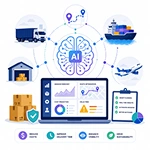
Logistics operations rarely run on a single system. Transportation, warehouse, fleet, order, carrier, and delivery workflows depend on data moving between applications, devices, and physical operations. Our logistics software development expertise helps businesses engineer new platforms, rework existing systems, connect operational technologies, and apply AI where it improves decisions.

Build a New Logistics Platform

Build a New Logistics Platform

Have a TMS, WMS, fleet, freight, delivery, or supply-chain product to develop? We translate operational requirements into domain models, application architecture, APIs, databases, role-based workflows, and interfaces for dispatchers, drivers, warehouse teams, managers, carriers, and customers.

Reengineer Legacy Logistics Systems

Reengineer Legacy Logistics Systems

Older logistics platforms can leave critical workflows tied to outdated frameworks, rigid integrations, manual processes, and fragmented data. We can progressively rework application architecture, APIs, databases, and infrastructure while preserving essential operations and creating a practical path toward newer technology components.

Connect Your Logistics Technology Ecosystem

Connect Your Logistics Technology Ecosystem

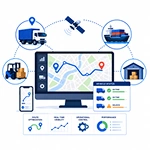
TMS, WMS, ERP, carrier platforms, telematics, GPS, mapping, IoT, ecommerce, and payment systems need consistent data exchange to support coordinated operations. We engineer APIs, EDI connections, middleware, webhooks, event-driven workflows, and synchronization layers around the systems already used across your logistics network.

Improve Routing, Visibility & Operational Control

Improve Routing, Visibility & Operational Control

Transportation decisions depend on constantly changing conditions across vehicles, shipments, drivers, locations, and delivery windows. We develop routing, dispatch, GPS tracking, geofencing, ETA, shipment-event, and operational dashboard capabilities that give teams better visibility into what is happening across transportation and delivery workflows.

Apply AI to Logistics Decisions

Apply AI to Logistics Decisions

Logistics generates large volumes of operational data that can support decisions beyond fixed business rules. Machine learning and AI can be applied to demand forecasting, ETA prediction, route analysis, inventory planning, anomaly detection, predictive maintenance, document processing, and exception prioritization within controlled logistics workflows.

Logistics Software Solutions for the Markets That Keep Goods Moving

Logistics businesses operate across different commercial, regulatory, and physical environments, so their technology cannot follow one operating model. Our logistics software solutions are engineered around the workflows, data structures, integrations, compliance requirements, and operational controls specific to each logistics segment.

supply chain software development services

Freight & Transportation Operations

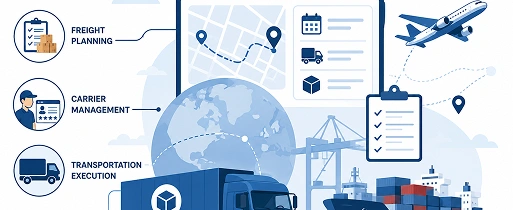
Freight businesses coordinate loads, carriers, rates, routes, documentation, and shipment events across multiple transportation modes. Our logistics software development company builds platforms that bring these activities into coordinated workflows while giving operations teams control over freight execution and transportation costs.

  • Freight Planning: Load consolidation, shipment scheduling, capacity allocation, and transport-mode selection
  • Carrier Management: Carrier onboarding, rate cards, tendering, bookings, and performance records
  • Transportation Execution: Dispatch, trip management, shipment milestones, and exception handling
logistic software development company

Warehouse & Distribution Management

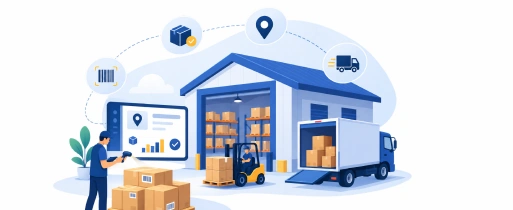
Warehouse technology has to reflect what happens on the floor, from receiving and putaway to picking, packing, staging, and dispatch. Warehouse management software can coordinate inventory movements, storage locations, labor activity, and fulfillment processes while integrating barcode and RFID-based identification.

  • Warehouse Execution: Receiving, putaway, picking, packing, staging, and dispatch workflows
  • Inventory Tracking: SKU-level stock positions, movement history, and location records
  • Storage Management: Bin allocation, slotting, warehouse locations, and putaway rules
  • Barcode & RFID: Item identification, scanning, stock transactions, and movement capture
transportation logistics software

Fleet & Telematics Solutions

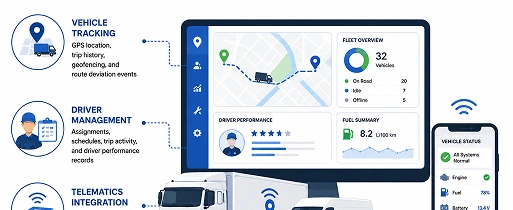
A fleet management software combined with telematics integration can bring GPS, vehicle diagnostics, driver activity, and operational events into a common control layer. This supports route optimization, fuel monitoring, maintenance scheduling, and driver safety tracking across the fleet.

  • Vehicle Tracking: GPS location, trip history, geofencing, and route deviation events
  • Driver Management: Assignments, schedules, trip activity, and driver performance records
  • Telematics Integration: Vehicle diagnostics, fuel data, engine events, and onboard systems
transportation software development company

Retail & Last-Mile Delivery

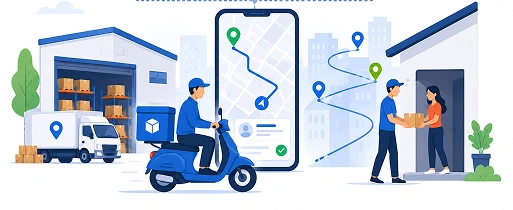
Retail delivery networks operate around high order volumes, narrow delivery windows, and frequent changes after dispatch. Our last-mile logistics software connects order allocation, route planning, driver workflows, live tracking, and proof-of-delivery events to keep fulfillment operations coordinated from warehouse to

  • Order Allocation: Assign deliveries according to location, priority, capacity, and availability
  • Route Optimization: Stop sequencing, traffic conditions, delivery windows, and route changes
  • Driver & Rider Apps: Navigation, task status, customer details, and delivery instructions
transportation software development services

Supply Chain Management

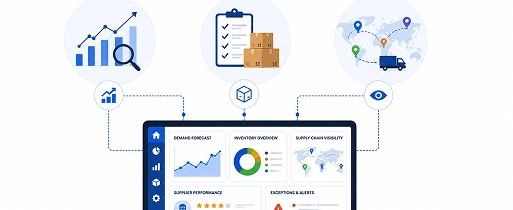
Supply chains require coordination across demand, inventory, suppliers, and fulfillment within one planning environment. Our logistics software developers connect these flows through data-driven planning, supplier performance tracking, operational analytics, system integrations, and workflow automation.

  • Demand Forecasting: Historical analysis, seasonal patterns, and machine learning-based projections
  • Inventory Planning: Safety stock, replenishment levels, allocation, and distribution planning
  • Supply Chain Visibility: Shipment events, inventory positions, exceptions, compliance status, and milestone tracking
logistic software development

Cargo, Port & Container Operations

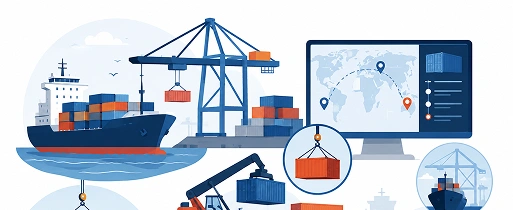
Port and cargo environments involve frequent handoffs between terminals, carriers, vessels, yards, and inland transportation. Digital systems coordinate yard activity, equipment use, documentation, and intermodal handoffs while maintaining a shared record of container movements and shipments.

  • Container Tracking: Container location, movement history, status, and custody events
  • Cargo Handling: Loading, unloading, transfer, inspection, and handling records
  • Port Scheduling: Vessel schedules, berth allocation, arrival coordination, and departure planning
logistics software development company

Cold Chain & Sensitive Goods Logistics

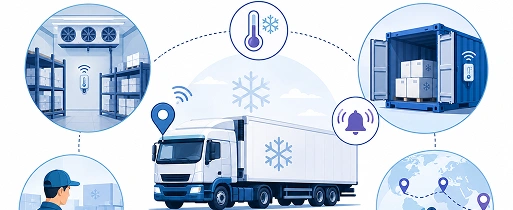
For temperature-sensitive cargo, delivery succeeds only when the product reaches its destination within defined environmental conditions. Connected IoT sensors, reefer fleet tracking, and compliance reporting capture conditions throughout storage and transit, creating an auditable record.

  • Temperature Monitoring: Continuous readings across refrigerated vehicles, containers, and storage facilities
  • Condition Alerts: Threshold-based notifications for temperature excursions and handling events
  • Cold Chain Traceability: Time-stamped records across storage, transit, and custody transfers
fintech software development company

Build the Technology Your Logistics Operation Is Missing

Disconnected systems, manual handoffs, and fragmented logistics data create operational friction. We engineer software around your workflows, integrations, and network.

Discuss Your Project

Engineering Capabilities Behind Intelligent Logistics Software Development

Modern logistics platforms increasingly combine AI, predictive models, IoT telemetry, geospatial systems, computer vision, cloud infrastructure, and real-time analytics. Our logistics software development services apply these technologies to transportation, warehousing, fleet operations, shipment visibility, inventory, and supply-chain workflows where they deliver measurable operational value.

fintech management consulting

Artificial Intelligence

Apply AI to shipment workflows, document processing, exception handling, customer communication, and operational decision support across logistics applications.

fintech web development

Machine Learning

Use historical and live logistics data for demand forecasting, ETA prediction, route analysis, fleet maintenance, inventory planning, and anomaly detection.

fintech design agency

IoT & Telematics

Connect vehicles, containers, warehouse equipment, and sensors to capture location, temperature, fuel, engine, vibration, and other telemetry for operational monitoring.

fintech web design agency

Predictive Analytics

Process transportation, inventory, fleet, warehouse, and order data to identify patterns, forecast demand, anticipate delays, and evaluate operational performance.

fintech software outsourcing

Computer Vision

Analyze images and video for applications such as warehouse inspection, package verification, damage detection, vehicle monitoring, and automated inventory processes.

fintech development outsourcing

GPS & Geospatial Technology

Integrate GPS, digital mapping, geofencing, and location intelligence into fleet management, shipment tracking, route planning, dispatch, and last-mile delivery systems.

Cloud Computing

Cloud Computing

Run logistics applications and data workloads across cloud infrastructure with containerized services, distributed databases, event-driven processing, and scalable compute resources.

financial software development services

Blockchain

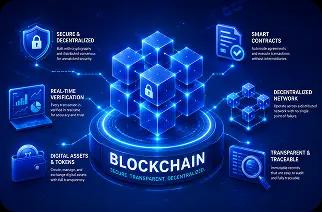
Create distributed transaction records for selected logistics workflows where multiple parties require shared records for provenance, shipment documentation, custody events, or reconciliation.

custom financial software development

AR & Wearable Technology

Support warehouse and field operations through pick-by-vision, wearable interfaces, guided workflows, and hands-free access to operational information.

custom financial software development

API & EDI Integration

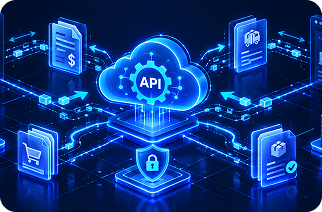
Connect logistics platforms with ERP, WMS, TMS, carrier, marketplace, mapping, payment, and partner systems through REST APIs, webhooks, EDI transactions, and event-based integrations.

custom financial software development

RFID & Barcode Technology

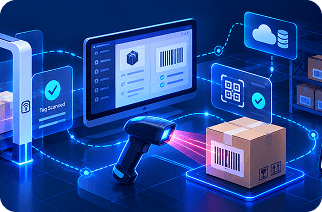
Capture item, pallet, container, and inventory movements through RFID readers and barcode scanning, feeding warehouse and fulfillment systems with transaction-level movement data.

Modernize, Integrate & Extend Your Existing Logistics Software

Existing logistics environments rarely fail because one system is missing. More often, TMS, WMS, ERP, fleet, carrier, mapping, and warehouse systems have evolved independently. We help businesses re-engineer the technology layer without unnecessarily disrupting the workflows that keep goods moving.

01

Replace Technical Debt Without Disrupting Operations

Modernize aging logistics systems incrementally by replacing outdated components, improving architecture, and preserving the workflows that keep operations running.

Decompose monolithic logistics applications
Replace obsolete frameworks and application components
Introduce APIs around legacy systems
Refactor databases and data-access layers
02

Connect the Systems That Move Your Data

Connect fragmented logistics platforms through reliable integration layers that keep shipment, inventory, fleet, order, and operational data synchronized.

TMS, WMS, and ERP integrations
Carrier and freight-platform APIs
GPS and telematics data ingestion
EDI, REST APIs, webhooks, and middleware
03

Apply AI to Decisions That Matter

Apply AI to real logistics data for smarter demand forecasting, ETA prediction, route optimization, anomaly detection, and automated exception management.

Predictive ETA and delay analysis
Demand and inventory forecasting
Route and capacity optimization
Automated document and exception processing

Your logistics operation can run on better-connected, better-engineered systems. Let’s identify the bottlenecks, data gaps, and technology constraints worth solving first.

Request a Proposal

The Technology Stack Behind Scalable Logistics Software

industry image

Swift

industry image

Objective-C

industry image

Java

industry image

Kotlin

industry image

Flutter

industry image

Xamarin

industry image

JavaScript

industry image

React Native

industry image

React.js

industry image

AngularJS

industry image

Express.js

industry image

Node.js

industry image

MySQL

industry image

PHP

industry image

Python

industry image

MongoDB

industry image

tensorFlow

industry image

PyTorch

industry image

Scikit-Learn

industry image

Keras

industry image

Theano

industry image

MXNet

industry image

H2O.ai

industry image

AWS

industry image

Ethereum

industry image

Cardano

industry image

R3 Corda

industry image

Quorum

industry image

CSS3

industry image

Hyperledger Fabric

industry image

Web3.js

industry image

Cassandra

industry image

Adobe XD

industry image

Sketch

industry image

Figma

industry image

Adobe Photoshop

industry image

Zeplin

industry image

Marvel

industry image

Balsamiq

industry image

Proto.io

Logistics Software Development Process for Complex Operational Systems

Our logistics software development process takes each product from operational discovery to production through defined engineering stages covering workflows, integrations, application architecture, testing, and continuous optimization.

Discovery
01

Discovery

The logistics software development team defines workflows, user roles, order lifecycles, dispatch processes, inventory needs, fleet operations, shipment tracking, integrations, exceptions, and reporting requirements.

Architecture
02

Architecture

Operational requirements are translated into application architecture, domain models, databases, APIs, integration patterns, cloud infrastructure, data flows, geospatial capabilities, dependencies, priorities, and release milestones.

 UX/UI
03

UX/UI

Interfaces are designed around dispatchers, warehouse teams, drivers, managers, and customers, with consoles, mobile apps, tracking views, maps, task queues, portals, and dashboards supporting workflows.

Development
04

Development

Logistics software developers build backend services, web applications, databases, APIs, and infrastructure while implementing order orchestration, dispatch, inventory, fleet operations, tracking, routing, ETA, and reporting.

Testing & Optimization
05

Testing & Optimization

Logistics software development validates APIs, EDI, GPS, telematics, mapping, RFID, barcode, IoT, and third-party integrations through functional, performance, security, and recovery testing before deployment.

Logistics Software Development Services for End-to-End Operations

Logistics businesses need software that coordinates transportation, fleet operations, warehouse activity, inventory, orders, deliveries, and the data connecting them. Our logistics software development services combine custom application engineering, system integrations, real-time tracking, automation, and analytics to support operations across the movement and fulfillment lifecycle.

Build logistics platforms around your operational workflows, business rules, user roles, and data structures rather than adapting processes to generic software. Our logistics software development company engineers applications for transportation, fulfillment, distribution, and supply-chain operations.

  • Workflow engineering: Model dispatch, fulfillment, approval, exception-handling, and other operational processes around your business rules.
  • Custom applications: Develop web, mobile, and administrative interfaces for logistics teams, drivers, warehouse staff, managers, and customers.
  • System integration: Connect operational applications with ERP, TMS, WMS, fleet, carrier, mapping, and third-party logistics systems.

Coordinate freight planning, shipment execution, carrier operations, and documentation through shipping logistics software built around complex transportation networks. We connect freight workflows with carrier systems, rate data, tracking services, and operational records to improve control across domestic and cross-border shipments.

  • Freight planning: Manage loads, consolidation, shipment priorities, and delivery schedules.
  • Carrier coordination: Connect bookings, rates, transport orders, and carrier communications.
  • Shipment documentation: Digitize bills of lading, invoices, contracts, delivery records, and applicable customs, cargo, and compliance documentation.

Synchronize customer orders, inventory positions, fulfillment activities, and shipment status across warehouses, stores, suppliers, and distribution channels. Our inventory management software and order management systems connect demand signals with stock availability, pricing rules, and fulfillment workflows across every sales channel and location.

  • Order orchestration: Synchronize customer orders, inventory positions, fulfillment activities, and shipment status across warehouses, stores, suppliers, and distribution channels. Our inventory management software and order management systems connect demand signals with stock availability, pricing rules, and fulfillment workflows across every sales channel and location.
  • Inventory integration: Synchronize stock data across warehouses, stores, suppliers, ERP platforms, and distribution systems.
  • Fulfillment automation: Connect picking, packing, dispatch, and delivery handoffs to order status and inventory events.

Coordinate freight planning, carrier allocation, dispatch, routing, and shipment execution through transportation management software designed around your network. Live transportation data can feed routing, scheduling, load optimization, and delivery decisions throughout each shipment lifecycle, from tender to proof of delivery.

  • Load planning: Assign freight based on capacity, delivery windows, and shipment requirements.
  • Route optimization: Calculate routes using distance, traffic, vehicle constraints, and delivery priorities.
  • ETA intelligence: Generate arrival estimates from live transportation events.

Connect vehicles, drivers, dispatchers, and operations teams through fleet management software that captures location, vehicle performance, fuel consumption, driver activity, and maintenance information. This visibility supports route planning, compliance tracking, cost control, and proactive maintenance scheduling across the entire fleet.

  • GPS tracking: Monitor vehicle locations, trips, stops, and geofenced areas.
  • Telematics integration: Process fuel, mileage, engine, tachograph, and sensor data.
  • Compliance Tracking: Support ELD, HOS, FMCSA, and DOT requirements through electronic logs, driver records, and compliance reporting.

Digitize warehouse execution across receiving, putaway, picking, packing, staging, and dispatch. Warehouse management software can connect inventory records with barcode, RFID, mobile scanning, labor, and equipment workflows, improving pick accuracy, throughput, and space utilization across every zone of the facility.

  • Inventory movement: Track goods across receiving, storage, picking, and fulfillment.
  • Barcode & RFID: Capture item-level movement and warehouse inventory events.
  • Warehouse orchestration: Coordinate picking routes, packing operations, docks, labor, and equipment.

Manage final-mile execution through driver applications, dispatch systems, route allocation, delivery tracking, and proof-of-delivery workflows. Last-mile delivery software connects field activity with order and transportation systems, giving customers real-time visibility while helping dispatchers respond to delays, exceptions, and re-routing needs.

  • Dynamic dispatch: Assign deliveries based on location, capacity, availability, and priority.
  • Driver applications: Support navigation, status updates, digital signatures, and ePOD.
  • Delivery tracking: Capture milestones, exceptions, and customer-facing updates.

Logistics operations depend on interconnected TMS, WMS, ERP, carrier, telematics, GPS, IoT, ecommerce, payment, and mapping systems. Our logistics integration and API development services connect these systems through APIs, middleware, and data synchronization, creating consistent information flows across transportation, warehousing, fulfillment, and delivery.

  • TMS, WMS & ERP integration: Synchronize shipments, orders, inventory, finance, warehouse activity, and transportation data across core enterprise systems.
  • Carrier & marketplace connectivity: Integrate carrier APIs, freight platforms, ecommerce systems, and external logistics providers for bookings, rates, shipment updates, invoices, and delivery events.
  • Telematics, GPS & IoT integration: Ingest vehicle locations, fleet telemetry, asset data, environmental conditions, and sensor events into logistics applications and operational dashboards.

Transform transportation, warehouse, fleet, order, and labor data into operational intelligence through data pipelines, analytics engines, dashboards, and reporting systems. These capabilities help teams evaluate performance, identify cost drivers, anticipate operational changes, and support data-informed decisions across planning and execution.

  • Data engineering: Build pipelines that consolidate operational data from TMS, WMS, ERP, fleet, IoT, and other logistics systems.
  • Operational dashboards: Develop reporting interfaces for delivery performance, fleet utilization, warehouse KPIs, inventory, and logistics costs.
  • Predictive analytics: Apply forecasting models to demand, transit times, capacity requirements, and fleet utilization.

Assess existing logistics applications, integrations, data flows, and operational bottlenecks before defining the technology path forward. Our logistics software consulting services cover product planning, architecture, modernization, technology selection, and implementation roadmaps, helping teams prioritize investments and reduce risk before development begins.

  • Technology assessment: Evaluate legacy applications, integrations, data flows, infrastructure, and workflow constraints.
  • Architecture planning: Define application architecture, APIs, infrastructure, integration patterns, and data models for the target environment.
  • Modernization strategy: Identify which systems and components should be re-engineered, integrated, replaced, or incrementally upgraded.

Why Choose Talentelgia for Complex Logistics Software Engineering

Talentelgia brings product engineering experience across complex software projects, supported by logistics-focused architecture, integration capabilities, and technical teams equipped to build transportation, warehouse, fleet, and supply chain platforms.

14+ Years of Technology Experience

14+ Years of Technology Experience

Complex logistics platforms require engineering experience across multiple technologies and evolving infrastructure. With 14+ years of technology experience, Talentelgia brings established logistics software development practices across web, mobile, cloud, APIs, databases, AI/ML, and connected systems to logistics product development.

50+ Technology Professionals Across Product Engineering

50+ Technology Professionals Across Product Engineering

Logistics software often requires multiple engineering disciplines working together, from development and UX/UI to QA, DevOps, data, and integrations. Our 50+ technology professionals provide the technical coverage needed to develop and evolve logistics platforms across their application, infrastructure, integration, and data layers.

Deep Integration Across Logistics Technology

Deep Integration Across Logistics Technology

Our logistics engineering experience includes 30+ TMS/WMS implementations, 40+ fleet and telematics integrations, 25+ IoT and connected-asset integrations, and 20+ real-time tracking platforms. These projects span API connectivity, GPS and sensor data, shipment events, vehicle telemetry, warehouse systems, and operational dashboards.

Experience Across Complex Logistics Software Projects

Experience Across Complex Logistics Software Projects

From transportation and fleet operations to warehousing, fulfillment, and supply chain workflows, our logistics development teams have delivered 85+ logistics projects involving complex integrations, operational data, multiple user roles, and interconnected software systems, backed by experience across 1,200+ technology projects.

Product Engineering Across Web, Mobile & Connected Systems

Product Engineering Across Web, Mobile & Connected Systems

Logistics software extends beyond a browser dashboard. Our capabilities span web applications, backend systems, cloud infrastructure, IoT integrations, AI/ML, and UX/UI, supporting different interfaces for dispatchers, drivers, warehouse operators, managers, customers, and administrators.

Compliance-Ready Logistics Engineering

Compliance-Ready Logistics Engineering

Our logistics software development services can incorporate applicable requirements and workflows around the ELD Mandate, DOT, C-TPAT, AEO, SOLAS VGM, IMO Regulations, IATA Cargo Regulations, TAPA TSR, TAPA FSR, ISO certifications, GS1 Standards, HACCP for cold-chain logistics, HOS, and Dangerous Goods Regulations (DGR) based on the markets and logistics operations your platform serves.

Proven Expertise for Businesses Worldwide

We work with businesses worldwide, combining deep technical expertise, product knowledge, and disciplined delivery practices to develop reliable digital solutions aligned with business goals, technical requirements, and evolving customer needs.

Go farm Yourself
Aiviz
Trade-Echo
Orion
Healthful
MarketFloor
Matrix
OptionPlay
Prep
marketplace
Pathory
life-science
CrkRules
Go farm Yourself
Aiviz
Trade-Echo
Orion
Healthful
MarketFloor
Matrix
OptionPlay
Prep
marketplace
Pathory
life-science
CrkRules

Client Experiences With Our Logistics Software Development

Our Security & Engineering Approach

Logistics platforms operate across vehicles, warehouses, carriers, devices, APIs, and constantly changing shipment events. Our engineering approach addresses compliance, data protection, integration security, infrastructure resilience, performance, testing, and controlled releases across connected operational environments.

Running across multiple compliance regimes?

FMCSA, SOLAS, IATA, customs; most platforms only need a few. We help you figure out which.

Get A Consultation!
01
GOVERNANCE

Compliance-Ready Architecture

Logistics platforms can be designed around applicable transportation, cargo, customs, security, and data requirements from the outset, including FMCSA, ELD/HOS, SOLAS VGM, IATA Dangerous Goods Regulations, GDPR, CCPA, and other market-specific obligations relevant to the workflows supported across deployments.

02
DEVELOPMENT

US Transportation Compliance

For fleet and dispatch platforms operating in the United States, software can account for FMCSA requirements, Electronic Logging Devices (ELD), Hours of Service (HOS), and applicable DOT records, helping ensure driver hours, operational data, and compliance-related workflows are handled consistently.

03
DATA SECURITY

Ocean Freight & Cargo Compliance

Ocean logistics software may need to support SOLAS Verified Gross Mass (VGM), IMO requirements, and US import filings such as Importer Security Filing (ISF) and Automated Manifest System (AMS)/ACE, depending on routes, cargo types, and services the platform supports.

04
INTEGRATION

Customs & Supply Chain Security

Cross-border platforms can incorporate workflows supporting customs documentation, classification data, broker exchanges, and security programs such as C-TPAT and Authorized Economic Operator (AEO) requirements, helping organizations manage trusted-trade processes without treating certification as a software compliance claim across markets.

05
INFRASTRUCTURE

Air Cargo & Dangerous Goods

Air freight platforms handling regulated shipments can account for IATA Cargo Regulations and Dangerous Goods Regulations (DGR), supporting structured shipment information, documentation, handling requirements, and validation workflows where applicable to cargo classification, routing, carrier acceptance, and operational processes involved.

06
OPTIMIZATION

Supply Chain Security & Traceability

Platforms supporting high-value, sensitive, or regulated logistics operations can consider TAPA TSR and TAPA FSR requirements alongside ISO 28000 and GS1 standards, helping address facility security, transportation security, supply chain risk, identification, traceability, and structured product information across operations.

07
QUALITY

Cold Chain & Specialized Cargo

Temperature-sensitive logistics software can support operational controls informed by HACCP principles and applicable handling requirements, including temperature monitoring, exception alerts, traceability, documentation, and escalation workflows. Requirements should be tailored to the commodities, jurisdictions, facilities, and transportation conditions involved across deployments.

08
DELIVERY

Data Protection & Payment Security

Logistics platforms processing customer, driver, shipment, location, or payment information should address applicable privacy and security requirements, including GDPR, CCPA, and PCI DSS where cardholder data is handled. Controls can cover access, encryption, retention, auditability, and secure data exchange.

Build the Logistics Infrastructure Your
Operation Has Been Waiting For

Disconnected systems, manual coordination, delayed shipment data, and operational bottlenecks shouldn't dictate how your business grows. Bring us the workflow that's holding you back, and we'll engineer the technology to remove it.

Frequently Asked Questions

  • This service is designed to provide users with a simple and convenient way to get the information or assistance they need.
  • This service is designed to provide users with a simple and convenient way to get the information or assistance they need.
  • This service is designed to provide users with a simple and convenient way to get the information or assistance they need.
  • This service is designed to provide users with a simple and convenient way to get the information or assistance they need.

  1. You can contact the relevant support team or check the available information and resources for further details
  2. You can contact the relevant support team or check the available information and resources for further details
  3. You can contact the relevant support team or check the available information and resources for further details
  4. You can contact the relevant support team or check the available information and resources for further details
We empower businesses with smart, future-ready IT services that accelerate performance and drive innovation. We will help you turn technology into your competitive edge.

Comprehensive Technology Solutions For Every Need

Schedule a Free Consultant

Phone
0 + 0 = ?

Get expert consultation for your project. Your ideas and project details remain completely confidential under NDA protection.

cookies-icon

We use cookies on our website to give you the most relevant experience by remembering your preferences and repeat visits. By clicking “Accept”, you consent to the use of ALL the cookies.