techDriven by Code. Defined by Innovation

Healthcare Software Development Services

Engineer healthcare software that connects clinical workflows, patient experiences, healthcare data, and connected systems, with capabilities spanning interoperability, EHR/EMR integrations, AI/ML, medical devices, and cloud infrastructure, supported by ISO-certified processes and compliance-aware engineering.

Engineering Healthcare Technology That Works Across the Entire Digital Ecosystem

14+

Years of Experience

1200+

Projects Delivered

98%

Client Retention

100%

Compliance-Ready

150+

Technology Experts

What Healthcare Technology Are You Building?

Healthcare software sits across clinical workflows, patient experiences, health data, connected devices, enterprise systems, and third-party platforms. Our healthcare software development expertise helps organizations engineer new digital products, modernize legacy technology, solve interoperability challenges, digitize complex workflows, and introduce AI where it delivers practical value.

Build a New Healthcare Product

Build a New Healthcare Product

Have a digital health platform, patient app, telehealth solution, provider portal, clinical application, or healthcare marketplace to develop? We translate product requirements into scalable architecture, data models, APIs, secure access controls, workflow engines, interfaces, and cloud infrastructure designed around the needs of patients, providers, administrators, and other healthcare users.
Modernize Legacy Healthcare Technology

Modernize Legacy Healthcare Technology

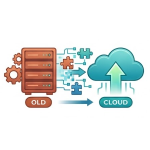
Critical healthcare workflows often rely on aging applications, fragmented databases, and outdated architectures. We modernize these systems through application refactoring, API enablement, database restructuring, cloud migration, and service decomposition—improving flexibility while protecting essential data, integrations, and operational continuity.

Solve Healthcare Interoperability Challenges

Solve Healthcare Interoperability Challenges

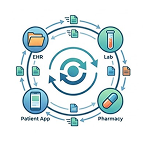
Healthcare data frequently moves between EHRs, EMRs, laboratories, pharmacies, imaging systems, medical devices, payer platforms, and digital applications. We engineer interoperability using HL7, FHIR, APIs, webhooks, event-driven services, and secure data pipelines, enabling consistent exchange through data mapping, validation, synchronization, authentication, and access controls.

Digitize Complex Healthcare Workflows

Digitize Complex Healthcare Workflows

We engineer workflow-driven healthcare applications for appointments, clinical documentation, referrals, orders, billing, and care coordination—using role-based experiences, automation, dashboards, approvals, and integrations to streamline processes and reduce disconnected workflows.

Apply AI to Healthcare Software

Apply AI to Healthcare Software

AI can add intelligence to healthcare applications when it is applied to defined workflows and governed data. We develop capabilities for clinical documentation, medical data extraction, intelligent search, predictive analytics, patient communication, document processing, workflow prioritization, and operational automation, with appropriate controls for human oversight, validation, data access, and auditability.

Healthcare Software Solutions Across the Digital Health Ecosystem

Healthcare organizations operate across radically different clinical, operational, regulatory, and technology environments. Our healthcare software development expertise spans care delivery, life sciences, insurance, medical devices, digital health, specialized care, public health, and wellness, with technology shaped around each market’s workflows and data requirements.

healthcare software development services

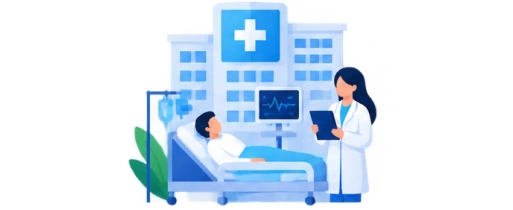
Hospitals & Health Systems

Hospitals and health systems coordinate high volumes of clinical, administrative, diagnostic, financial, and patient data across departments and care settings. Healthcare software can connect these workflows while integrating EHRs, laboratory systems, imaging platforms, billing infrastructure, and other systems supporting day-to-day hospital operations.

  • EHR & EMR Systems: Clinical records, encounters, orders, and documentation
  • Hospital Management: Admissions, beds, departments, staffing, and resources
  • Clinical Decision Support: Data-driven insights within clinical workflows
  • PACS & Imaging: Medical image storage, retrieval, and analysis
pharmaceutical and life sciences software development

Pharmaceutical, Biotech & Life Sciences

Pharmaceutical and life sciences organizations depend on software across research, clinical development, manufacturing, regulatory processes, supply chains, and medication management. Purpose-built platforms can connect research data, trial operations, production workflows, documentation, and downstream physician or patient applications.

  • Clinical Trial Management: Study workflows, participants, sites, and milestones
  • Research Data Platforms: Structured scientific and clinical datasets
  • Manufacturing Systems: Production workflows, quality, and process monitoring
healthcare insurance software development

Healthcare Insurance Providers

Health insurers manage interconnected workflows spanning enrollment, eligibility, underwriting, claims, billing, policy administration, risk, and member engagement. Healthcare software can connect these processes with analytics and provider-facing systems to improve information flow across the insurance lifecycle.

  • Claims Management: Processing, adjudication, and claims workflows
  • Eligibility Verification: Member coverage and benefit validation
  • Policy Administration: Enrollment, plans, renewals, and policy servicing
medical device and MedTech software development

Medical Device & MedTech Companies

Medical device manufacturers and MedTech companies require software that connects physical products with data platforms, clinical workflows, device management systems, and healthcare applications. Medical device software can support connected monitoring, device configuration, analytics, and data exchange across the product lifecycle.

  • Medical Device Software: Embedded and connected application workflows
  • IoMT Platforms: Device connectivity, telemetry, and remote monitoring
  • Device Data Platforms: Storage, processing, and visualization of measurements
digital health and telemedicine software development

Digital Health & Telemedicine Providers

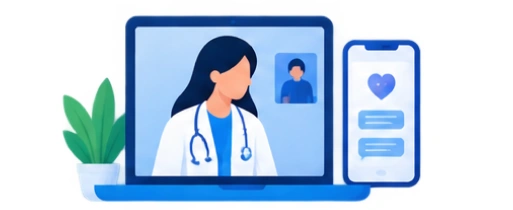
Digital health businesses need software that brings clinical services, patient engagement, remote monitoring, communication, and digital therapeutics into connected experiences. Healthcare app development can support virtual care models while integrating clinical systems, devices, payments, and patient data.

  • Telemedicine Platforms: Virtual consultations and asynchronous care
  • Patient Engagement: Portals, messaging, reminders, and care plans
  • Prescription Platforms: Digital prescriptions, medication access, and tracking
medical laboratory and diagnostic software

Medical Laboratories & Diagnostic Providers

Diagnostic organizations depend on software for specimen management, laboratory workflows, results processing, imaging, reporting, and information exchange. Laboratory software can connect diagnostic operations with providers, patients, and broader healthcare information systems.

  • LIMS Platforms: Sample tracking, testing, inventory, and workflows
  • LIS Systems: Laboratory information and result management
  • PACS Integration: Diagnostic imaging storage and retrieval
specialized healthcare software development

Specialized Care Providers

Mental health, rehabilitation, hospice, palliative care, and long-term care providers operate workflows that extend well beyond conventional clinical encounters. Specialized healthcare software can support longitudinal care, remote monitoring, therapy workflows, caregiver coordination, and patient engagement across these environments.

  • Mental Health Platforms: Therapy, assessments, and behavioral health workflows
  • Rehabilitation Systems: Treatment plans, progress, and therapy documentation
  • Long-Term Care: Resident records, medication, and care coordination
healthcare research and CRO software

Healthcare Research & CROs

Contract research organizations and healthcare research teams require technology for trial management, participant engagement, clinical data collection, monitoring, and research analytics. Specialized healthcare platforms can connect study operations with structured datasets, regulatory documentation, and remote trial workflows.

  • Clinical Trial Management: Study, site, participant, and milestone workflows
  • eCOA Platforms: Electronic collection of clinical outcomes
  • eTMF Systems: Trial documentation and document management
  • Remote Trial Monitoring: Distributed study oversight and tracking
public health healthcare software development

Healthcare GOs, NGOs & Public Health

Government and nonprofit healthcare organizations operate at population scale, often managing disease surveillance, public health programs, healthcare access, funding, and emergency response. Healthcare software can connect field operations with centralized data and decision-support systems.

  • Population Health: Aggregate health trends and outcomes
  • Disease Surveillance: Monitor outbreaks and epidemiological patterns
  • Public Health Systems: Coordinate programs, services, and reporting
veterinary software development services

Veterinary Clinics & Animal Healthcare

Veterinary organizations need digital systems adapted to animal health records, clinical workflows, appointments, diagnostics, medication, billing, and remote monitoring. Veterinary software can connect practice operations with patient histories, diagnostic information, inventory, and client-facing applications.

  • Veterinary Practice Management: Clinical and administrative workflows
  • Animal Health Records: Digital histories, treatments, and diagnoses
  • Veterinary Diagnostics: Laboratory and diagnostic workflows
fitness and wellness software development

Fitness & Wellness Companies

Fitness and wellness businesses increasingly combine mobile experiences, connected devices, personalized programs, analytics, and digital coaching. Healthcare software can connect activity, nutrition, sleep, biometric, and behavioral data with consumer-facing experiences and business management platforms.

  • Fitness Applications: Activity tracking and personalized programs
  • Wellness Platforms: Health goals, routines, and progress tracking
  • Nutrition Applications: Food logging and dietary analytics
fintech software development company

Your Healthcare Technology Shouldn’t Work in Silos

When applications, data, devices, and workflows operate independently, complexity spreads across the entire technology environment. We engineer custom healthcare software to connect these layers, modernize what holds you back, and create the technical foundation needed for new digital health capabilities.

Discuss Your Project

Advanced Technologies Transforming Healthcare Software Development

Healthcare products increasingly connect clinical data, AI, cloud infrastructure, medical devices, analytics, and digital applications. Our healthcare software development services apply these technologies where they can improve workflows, connect fragmented systems, support clinical decisions, and enhance patient and provider experiences.

Artificial Intelligence in fintech

Artificial Intelligence

Apply AI to clinical documentation, workflow automation, patient support, information retrieval, and healthcare experiences that reduce repetitive work and improve efficiency.

Machine Learning in fintech

Machine Learning

Use healthcare datasets for predictive modeling, risk assessment, patient segmentation, outcome analysis, anomaly detection, and pattern recognition across clinical and operational data.

Generative AI in fintech

Generative AI

Generate clinical summaries, documentation, reports, responses, and knowledge-based content from healthcare information while reducing repetitive documentation and improving information retrieval.

Agentic AI in fintech

Agentic AI

Coordinate multi-step healthcare workflows spanning information gathering, documentation, administration and patient communication through controlled processes with defined permissions.

Financial interoperability solutions

Healthcare Interoperability

Connect healthcare applications and clinical systems using HL7, FHIR, APIs, data mapping, transformation, and integration layers that enable structured information exchange.

IoT technology in fintech

Internet of Things (IoT)

Connect medical devices, wearables, monitoring equipment, and healthcare infrastructure to capture measurements, process telemetry, synchronize health data, and support connected workflows.

Fintech data analytics

Data Analytics

Transform clinical, patient, device, and operational data into dashboards, reports, cohort analysis, predictive insights, and performance indicators that support healthcare decision-making.

Cloud computing for fintech applications

Cloud Computing

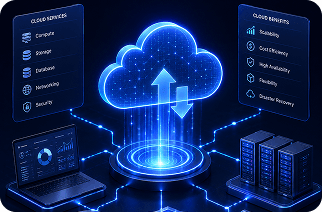
Run healthcare applications and data workloads across cloud infrastructure with architectures supporting performance, data management, integrations, deployment, scalability, and evolving requirements.

Cybersecurity

Cybersecurity

Protect healthcare applications and health information through authentication, authorization, encryption, access controls, audit trails, monitoring, and security-focused architecture across application layers.

Evolve Your Healthcare Technology Without Starting From Scratch

Healthcare technology environments accumulate over time, leaving clinical applications, patient platforms, databases, devices, and third-party systems deeply embedded in daily operations. We help organizations evolve these environments through targeted modernization, stronger interoperability, improved data architecture, and new capabilities without unnecessary disruption.

01

Modern Architecture for Aging Healthcare Applications

Legacy healthcare applications can still deliver value, but outdated architecture can slow development. We modernize applications selectively through better architecture, data access, modular services, and infrastructure.

Modularize tightly coupled applications
Refactor outdated application layers
Modernize databases and data access
Adopt cloud infrastructure where appropriate
02

Make Your Healthcare Systems Exchange Usable Data

We connect healthcare systems by securely mapping, normalizing, and exchanging data across clinical, administrative, diagnostic, patient, device, and third-party environments.

EHR and EMR integration
HL7 and FHIR data exchange
Lab, imaging, pharmacy, and device integration
APIs, middleware, and event-driven services
03

Extend Existing Platforms With Intelligent Capabilities

We add AI to existing healthcare platforms for documentation, data extraction, prediction, search, and workflow automation—with controls for security, validation, access, and human oversight.

AI-assisted clinical documentation
Healthcare document extraction
Predictive analytics and risk modeling
Natural-language healthcare search

Your existing healthcare technology can be a foundation, not a limitation. Let’s identify where architecture, interoperability, data, or intelligent capabilities can create the next level of value.

Request a Proposal

Technology Foundation for Next-Generation Healthcare Platforms

industry image

Swift

industry image

Objective-C

industry image

Java

industry image

Kotlin

industry image

Flutter

industry image

Xamarin

industry image

JavaScript

industry image

React Native

industry image

React.js

industry image

AngularJS

industry image

Express.js

industry image

Node.js

industry image

MySQL

industry image

PHP

industry image

Python

industry image

MongoDB

industry image

tensorFlow

industry image

PyTorch

industry image

Scikit-Learn

industry image

Keras

industry image

Theano

industry image

MXNet

industry image

H2O.ai

industry image

AWS

industry image

Ethereum

industry image

Cardano

industry image

R3 Corda

industry image

Quorum

industry image

CSS3

industry image

Hyperledger Fabric

industry image

Web3.js

industry image

Cassandra

industry image

Adobe XD

industry image

Sketch

industry image

Figma

industry image

Adobe Photoshop

industry image

Zeplin

industry image

Marvel

industry image

Balsamiq

industry image

Proto.io

Our Healthcare Software Development From Strategy to Production

Healthcare products move through clinical workflows, sensitive data environments, external systems, and regulatory requirements that need to be addressed throughout development. Our healthcare software development process takes the product from workflow discovery and technical planning through integration, validation, deployment, and ongoing improvement.

Discovery
01

Discovery

Product goals become clinical and operational requirements. Workflows, user roles, data flows, exceptions, dependencies, and EHR/EMR, laboratory, pharmacy, payer, device, and third-party integrations are mapped.

Architecture
02

Architecture

Requirements become a technical blueprint covering architecture, models, APIs, databases, infrastructure, identity, access controls, data exchange, interoperability, and HL7, FHIR, and SMART on FHIR standards.

UX/UI Design
03

UX/UI Design

Clinical and administrative workflows translate into interfaces for patients, clinicians, care coordinators, and operational teams, balancing accessibility, role-based access, clinical context, information hierarchy, and interactions.

Development
04

Development

Backend services, APIs, databases, and infrastructure are engineered alongside EHR/EMR, laboratory, pharmacy, device, wearable, payment, and third-party integrations, with synchronization, validation, automation, and error handling.

Testing & Optimization
05

Testing & Optimization

Functional, integration, performance, usability, and security testing validates authentication, authorization, data handling, APIs, auditability, and failure scenarios before deployment, monitoring, verification, optimization, updates, and maintenance

Healthcare Software Development Services Across Every Technology Layer

Healthcare technology spans clinical applications, EHRs, medical devices, data platforms, operational systems, and patient-facing channels. Our healthcare software development services address the engineering layers connecting these environments, from product architecture and modernization to clinical data exchange, AI, connected devices, and analytics.

Custom healthcare software development covers products built around specific clinical, operational, and patient-facing workflows rather than predefined modules. Our healthcare app development teams engineer web, mobile, and backend systems with domain-specific data models, role-based workflows, APIs, integrations, and AI capabilities aligned with defined product use cases.

  • Workflow architecture: Translate complex healthcare processes into application logic.
  • Clinical modules: Digitize patient, provider, and care workflows.
  • Role-based systems: Configure functionality around different healthcare users.
Architecture decisions can determine how effectively a healthcare product handles clinical data, integrations, users, and future expansion. Our healthcare software consulting services assess existing technology, workflows, infrastructure, and integration requirements while identifying AI opportunities, data requirements, and technical dependencies for future development.

  • Technology assessment: Evaluate existing healthcare platforms and infrastructure.
  • Architecture planning: Define application layers, services, databases, and APIs.
  • Workflow analysis: Identify technical requirements across clinical processes.

Healthcare organizations operate interconnected systems with different interfaces, protocols, and data structures. Integration engineering connects EHRs, laboratories, imaging systems, pharmacies, billing platforms, devices, and applications through appropriate interfaces and transformation layers.

  • HL7 connectivity: Exchange clinical messages across healthcare systems.
  • FHIR integration: Connect applications through standardized healthcare resources.
  • API connectivity: Integrate third-party healthcare platforms and services.

Older healthcare platforms often contain critical workflows and business logic that cannot simply be discarded. Modernization targets architectural bottlenecks while preserving functionality that healthcare organizations still depend on.

  • Codebase refactoring: Restructure outdated components for maintainability.
  • Monolith decomposition: Separate tightly coupled functionality into modules.
  • Database modernization: Improve aging healthcare data architectures.
  • AI enablement: Prepare modernized platforms for AI services and automation.

EHR and EMR software development brings clinical records, encounters, diagnoses, medications, allergies, laboratory results, orders, and documentation into structured digital workflows. We develop electronic health record systems and connected applications with clinical data models, FHIR APIs, HL7 interfaces, and synchronization capabilities for healthcare environments.

  • Patient records: Manage longitudinal clinical information and histories.
  • FHIR connectivity: Exchange structured healthcare information through FHIR.
  • HL7 integration: Connect clinical systems through HL7 messaging.
  • AI-assisted documentation: Support clinical note creation and information structuring.

Healthcare AI requires more than adding an LLM to an application. Useful implementations combine clinical datasets, model pipelines, inference infrastructure, application workflows, and human review around defined clinical or operational use cases.

  • Clinical NLP: Extract structured information from unstructured records.
  • AI medical scribes: Generate documentation from clinical conversations.
  • LLM assistants: Support healthcare queries and workflow automation.
  • RAG pipelines: Retrieve relevant information from healthcare knowledge.

Healthcare data comes from clinical systems, devices, applications, claims, laboratories, and operational platforms. Data engineering brings these sources together through ingestion, transformation, normalization, storage, analysis, and visualization layers.

  • Data ingestion: Capture information from distributed healthcare sources.
  • ETL pipelines: Transform healthcare data for downstream applications.
  • Data normalization: Standardize information across heterogeneous systems.
  • Predictive analytics: Identify patterns across healthcare datasets.

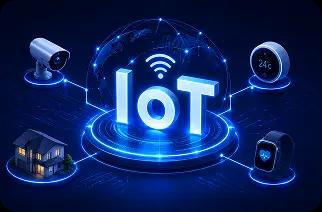
Connected healthcare systems must handle device protocols, telemetry, timestamps, connectivity interruptions, measurement formats, and downstream processing. We develop software layers that integrate device SDKs, APIs, normalize readings, process events, and connect wearable ecosystems while moving device-generated data into healthcare systems.

  • BLE Connectivity: Connect supported devices with healthcare applications.
  • Telemetry Ingestion: Capture continuous device-generated health measurements.
  • Device Monitoring: Track measurements through real-time dashboards.

Telehealth software development combines video consultations, appointment scheduling, patient intake, digital prescriptions, clinical documentation, and messaging. WebRTC, real-time communication, asynchronous care, encounter records, follow-up coordination, and clinical integrations support virtual consultations across connected healthcare workflows, referrals, reminders, and subsequent care.

  • WebRTC Infrastructure: Enable browser-based video consultations and calls.
  • Scheduling Workflows: Coordinate providers, patients, appointments, and availability.
  • E-Prescribing: Connect prescriptions with post-consultation workflows.

Hospital software brings together workflows spanning registration, admissions, departments, clinical services, billing, diagnostics, staffing, resources, and patient movement. We connect appointment scheduling, staff coordination, laboratory integration, inventory tracking, and AI-powered operations with underlying clinical systems across every hospital department workflow.

  • Patient Administration: Manage registration, admissions, and patient movement.
  • Bed Management: Track allocation, occupancy, and patient transfers.
  • Billing Workflows: Connect charges, payments, insurance, and invoices.

Medication management spans prescription creation, dispensing, refills, adherence, inventory, drug information, and provider communication. Our healthcare developers engineer pharmacy software that automates refills, dosage reminders, batch tracking, and AI-assisted medication insights while connecting provider systems and maintaining structured patient data.

  • Prescription Management: Handle electronic prescriptions and medication orders.

  • Medication Records: Maintain current and historical medication information.
  • Adherence Tracking: Monitor patient medication-taking patterns.

Healthcare CRM platforms centralize patient profiles, referrals, appointments, communication history, follow-up workflows, care-plan updates, and automated reminders. As a healthcare development agency, we integrate these workflows with EHRs, patient portals, messaging systems, and engagement analytics platforms to coordinate patient engagement.

  • Patient Profiles: Centralize demographics, preferences, and interaction history.
  • Referral Management: Track referrals across healthcare networks.
  • Two-Way Messaging: Connect patients with healthcare teams.

What Sets Talentelgia Apart in Healthcare Software Engineering

Healthcare software cannot be engineered like a conventional business application. Clinical workflows, sensitive patient information, interoperability requirements, connected systems, and multiple user roles all influence how the product must be designed and built. As a healthcare software development company, we bring these considerations into product architecture, development, integrations, and ongoing engineering from the outset.

14+ Years of Technology Experience

14+ Years of Technology Experience

With 14+ years of technology experience, Talentelgia brings proven engineering expertise across application architecture, APIs, databases, cloud infrastructure, integrations, mobile platforms, and evolving technology stacks. This depth helps translate complex product requirements into practical technical decisions throughout the development lifecycle.

Interoperability Designed Into the Architecture

Interoperability Designed Into the Architecture

Clinical information often moves between systems built around different standards, interfaces, and data structures. Our healthcare software development services incorporate HL7, FHIR, APIs, data mapping, transformation, and integration layers to support information exchange across healthcare environments.

AI & Data Capabilities for Healthcare Products

AI & Data Capabilities for Healthcare Products

AI becomes valuable when it addresses a defined clinical or operational requirement. Our healthcare development teams work with machine learning, NLP, LLMs, RAG pipelines, predictive analytics, and data engineering to incorporate intelligent capabilities into applications, analytics platforms, and workflow-driven software where they provide measurable utility.

Engineering Support Beyond Initial Delivery

Engineering Support Beyond Initial Delivery

Healthcare products continue to change as workflows, integrations, users, and operational requirements evolve. With a 98% client retention rate, Talentelgia supports ongoing product development through enhancements, integrations, performance improvements, modernization, and technical maintenance after launch.

Proven Experience Across Complex Technology Projects

Proven Experience Across Complex Technology Projects

Complex software initiatives often involve multiple platforms, technologies, integrations, and technical dependencies. With 1,200+ projects delivered, Talentelgia brings experience across diverse architectures, technology stacks, and engineering challenges, helping teams navigate technical decisions from initial development through continued product evolution.

Compliance Considerations Built Into Development

Compliance Considerations Built Into Development

Privacy and regulatory requirements influence how software handles information, access, storage, transmission, and auditability. Our healthcare development process considers applicable frameworks such as HIPAA, GDPR, SOC 2, ISO 27001, and relevant regional requirements based on the product, market, and types of data involved.

Proven Expertise for Businesses Worldwide

We work with businesses worldwide, combining deep technical expertise, product knowledge, and disciplined delivery practices to develop reliable digital solutions aligned with business goals, technical requirements, and evolving customer needs.

Go farm Yourself
Aiviz
Trade-Echo
Orion
Healthful
MarketFloor
Matrix
OptionPlay
Prep
marketplace
Pathory
life-science
CrkRules
Go farm Yourself
Aiviz
Trade-Echo
Orion
Healthful
MarketFloor
Matrix
OptionPlay
Prep
marketplace
Pathory
life-science
CrkRules

What Clients Say About Our Healthcare Software Development

Our Security & Engineering Approach

Healthcare software operates within tightly controlled environments where sensitive health information, clinical workflows, connected devices, and cross-system data exchange must be engineered with appropriate safeguards. Our approach considers applicable privacy, security, regulatory, interoperability, and healthcare data requirements throughout architecture, development, integration, testing, and deployment.

Building for a federal health agency?

FedRAMP and FISMA change your hosting, access, and documentation requirements. We've mapped this before.

Discuss Your Project
01
GOVERNANCE

HIPAA & HITECH-Aligned Engineering

Healthcare applications handling PHI or ePHI require safeguards for privacy, security, access, transmission, and auditability. We engineer controls around authentication, authorization, encryption, audit logging, secure data exchange, minimum necessary access, and appropriate data-handling workflows while aligning implementation decisions with applicable HIPAA and HITECH requirements.

02
PRIVACY

Healthcare Privacy & Data Protection

Healthcare products operating across jurisdictions may need to address GDPR, CCPA, PIPEDA, and Brazil’s LGPD alongside applicable local privacy requirements. We incorporate privacy-aware architecture through consent management, data minimization, retention controls, access restrictions, encryption, auditability, and governed data sharing appropriate to each product’s scope.

03
REGULATION

Medical Device & Digital Health Regulation

Software functions that meet applicable medical-device definitions can introduce additional regulatory requirements. For relevant products, we consider FDA requirements in the United States and EU MDR requirements in Europe alongside intended use, risk classification, software functionality, documentation, quality processes, and regulatory expectations throughout the engineering lifecycle.

04
DATA PROTECTION

Substance Use Disorder Data Protection

Applications handling substance use disorder information may be subject to specific confidentiality requirements under 42 CFR Part 2. Where relevant, we account for authorization, consent, disclosure, access, and data-segmentation workflows alongside privacy and security controls when designing software that stores, processes, exchanges, or exposes regulated records.

05
INTEROPERABILITY

Healthcare Interoperability Standards

Healthcare interoperability depends on structured information that different systems can consistently exchange and interpret. We engineer integrations using HL7 and FHIR where appropriate, supporting clinical data exchange between EHRs, laboratories, diagnostic systems, patient applications, medical devices, and other healthcare platforms through validated interfaces.

06
DATA STANDARDS

Clinical Coding & Healthcare Data Standards

Healthcare applications often rely on standardized clinical and administrative vocabularies to structure information consistently. Depending on the product, we can support ICD-10 for diagnoses, CPT for procedures and services, and LOINC for laboratory and clinical observations across application workflows, reporting, integrations, analytics, and healthcare data exchange.

07
SECURITY

Information Security & Assurance

Healthcare security extends beyond application code into identity, infrastructure, development practices, monitoring, and operational controls. We apply security principles informed by ISO/IEC 27001, SOC 2, and NIST CSF, covering access management, encryption, vulnerability management, logging, monitoring, secure development, risk management, and incident preparedness.

08
FEDERAL HEALTHCARE

Government & Federal Healthcare Environments

Healthcare software supporting US federal environments may encounter additional requirements such as FISMA or FedRAMP, depending on the agency, system, data, hosting model, and authorization boundary. Where applicable, we account for relevant security controls, assessment considerations, cloud requirements, access management, monitoring, documentation, and authorization processes.

Engagement Models for Healthcare Software Development

Healthcare technology initiatives vary widely in scope, ownership, regulatory complexity, and product maturity. We offer engagement models that accommodate defined software builds, long-term product engineering, and specialized technical requirements, giving healthcare organizations flexibility in how they access engineering expertise and scale development capacity.

Have a Healthcare Technology
Challenge Worth Solving?

Whether you’re building a new healthcare product, modernizing an existing platform, connecting fragmented systems, or adding intelligent capabilities, Talentelgia brings product engineering, healthcare interoperability, data, cloud, AI, and security expertise together to move your technology from requirement to production.

Frequently Asked Questions

Why might an admin user receive a “non-admin user” error?

Possible reasons include an authentication-token issue, incorrect role information, missing permissions, session problems, API authorization issues, or incorrect request headers.

We empower businesses with smart, future-ready IT services that accelerate performance and drive innovation. We will help you turn technology into your competitive edge.

Comprehensive Technology Solutions For Every Need

Schedule a Free Consultant

Phone

Get expert consultation for your project. Your ideas and project details remain completely confidential under NDA protection.

0 + 0 = ?
cookies-icon

We use cookies on our website to give you the most relevant experience by remembering your preferences and repeat visits. By clicking “Accept”, you consent to the use of ALL the cookies.